
Restless legs syndrome (RLS) is a condition that may qualify veterans for a VA rating if they can prove a service connection. In many cases, veterans with RLS have other underlying or related conditions (sleep apnea or PTSD, for example) that may also qualify for VA disability benefits.
Ready to get started?

In this article about restless legs syndrome VA rating
It happens almost every night. You get in bed to go to sleep, and as soon as your body gets comfortable, your legs start itching and burning. You move them around to alleviate the discomfort, but it starts again as soon as you get still. The result is an inability to sleep that’s affecting every aspect of your life. If this sounds like you, you may want to learn more about restless legs syndrome and its connection to trauma and sleep disorders.
Understanding restless legs syndrome
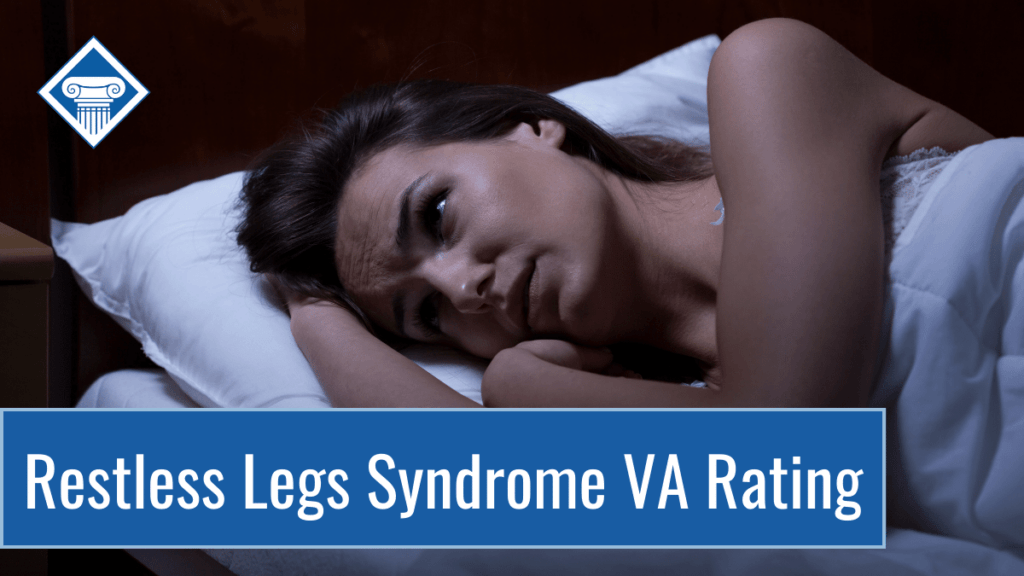
RLS is a neurological condition that causes itching, burning, or other uncomfortable sensations. The cause of RLS is unknown. Itching or burning creates a constant urge to move the affected body part and, as the name implies, is most common in one or both legs. The symptoms of RLS are most noticeable during periods of rest – for example, at night when you’re trying to sleep.
For some people, RLS is a small inconvenience that’s easily managed through medication or other lifestyle adjustments recommended by a doctor. For others, the effects of RLS are quite disabling and can lead to the onset of other conditions.
“Sleep hygiene has an impact on your metabolism, your overall physical health. It also can impact your safety in the workplace,” said VA disability lawyer Zack Evans. “If you’re not sleeping well, that can impact you physiologically. It can impact your hormone levels and how your body fights infection.”
RLS and sleep
The uncomfortable sensation from RLS frequently occurs at night when you are trying to sleep. Stretching and other movements of the legs provide temporary relief, but this often leads to insomnia and sleep deprivation. Sleep loss can make your daily activities more difficult and exacerbate other conditions, like depression and anxiety. Other effects of sleep problems caused by RLS include mental impairments such as memory loss, mood swings, and an inability to concentrate. All of this can disrupt your relationships with other people – at home and at work.
While many people experience discomfort from RLS at night, your RLS symptoms may also happen during the day, which can make it difficult to sit for long periods of time at work.
If left untreated, RLS symptoms can become more severe. If treated, RLS symptoms can go into remission. Doctors can treat it through medication, but it’s more effective to recognize and treat the associated cause or condition. RLS is associated with multiple other conditions.
Restless legs syndrome VA rating
You can receive VA disability benefits for restless legs syndrome alone. The VA rates it under diagnostic code 8620, neuritis of the sciatic nerve. The rating you receive for your restless leg syndrome depends on the severity of your symptoms:
| Description | VA rating |
|---|---|
| Severe | 60% |
| Moderately severe | 40% |
| Moderate | 20% |
| Mild | 10% |
It’s common for veterans to receive a rating for RLS which is combined with its associated condition. While the direct cause of RLS varies, doctors link it to various other conditions. Common ways RLS may be related to a veteran’s military service include:
- Medication and other substances. RLS is sometimes attributable to or worsened by the use of certain medications, including antidepressants, anti-nausea, and antipsychotic drugs. The use of alcohol, nicotine, and caffeine is also connected to the onset of RLS.
- Neurological diseases. Those with Parkinson’s disease (a condition that affects dopamine pathways) or other neuropathy like sciatica have an increased chance of developing RLS. However, sciatica is a distinct condition.
- Sleep disorders. Sleep apnea and other comparable conditions that disrupt sleep are known to also trigger or increase the symptoms associated with RLS.
- Mental health conditions. Those with mental health conditions like depression and post-traumatic stress disorder (PTSD) can also develop RLS. The causal connection between RLS and PTSD is especially important to understand given the increased frequency of PTSD among veterans due to their service.
Restless legs syndrome secondary to PTSD
Researchers have found a connection between restless legs syndrome and post-traumatic stress disorder. PTSD is a severe type of trauma disorder. It develops after a person is exposed to an extreme stressor and can’t process the emotions associated with it. PTSD is a common response for soldiers trying to work through things they witnessed or experienced during combat or active duty.
PTSD symptoms include:
- Hostility
- Flashbacks
- Avoidance
- Anxiety
- Fear
- Intrusive thoughts
- Insomnia
Mental health and medical professionals offer treatment for PTSD. However treated or untreated, PTSD usually interferes with a person’s ability to function in their daily life and puts them at risk of addiction and suicide.
Research connects restlessness with PTSD. Restlessness also results in an inability to sleep, which exacerbates PTSD symptoms. The effect can be acycle of trauma symptoms, restlessness, and insomnia that has a compounding effect.
The VA rates PTSD at 0%, 10%, 30%, 50%, 70%, or 100%.
Restless legs syndrome secondary to sleep apnea
Sleep apnea is a sleep disorder in which breathing repeatedly stops during sleep. It makes you feel tired– even with a full night’s rest–because your sleep was repeatedly interrupted. It affects your ability to function in daily life. Although they’re uncertain how they connect, researchers have linked sleep apnea and restless legs syndrome. Sleep apnea and PTSD also are linked.
Other symptoms of sleep apnea include:
- Excessive sleepiness and fatigue
- Insomnia
- Nightmares
- Snoring
- Loud breathing
- Depression
- Dry mouth or throat
- Headache
- Irritability
- Mood swings
- Weight gain


Treatment for sleep apnea could include wearing a continuous positive airway pressure (CPAP) machine at night to ensure adequate oxygen flow. Doctors frequently recommend weight loss and more calming sleep routines, including regular bedtime and avoiding stimulants before bed, as treatment of sleep apnea.
If left untreated, sleep apnea can result in more serious health issues, including the risk of heart attack or stroke.
The VA rates sleep apnea up to 100%.
TDIU and restless legs syndrome
Restless legs syndrome has the potential to interfere with your ability to work — especially in a desk job or other sedentary work environment.
It can be especially noticeable if your daily activities involve a lot of sitting or other sedentary events. If you work in an office, RLS symptoms make it difficult to sit still and focus on work tasks. RLS can also make extended travel difficult because of the constant urge to move.
If that is the case, you could qualify for VA unemployability benefits.
How our VA disability lawyers can help
Woods & Woods has helped thousands of veterans get the VA benefits they deserve. Call us for a free case evaluation to find out how we can help. If we take your case, you only pay if you win.

Let’s get started today
Frequently asked questions
Yes, VA disability compensation is available for restless legs syndrome.
There isn’t a test for restless legs syndrome. Doctors typically diagnose it based on your symptoms, your medical history, and if it runs in your family.

Neil Woods
Neil Woods is a VA disability attorney and the owner and president of Woods & Woods. He received his law degree from Western Michigan University.