For some women veterans, ongoing pelvic pain, heavy bleeding, or fatigue from anemia can start to take over their daily lives. These can all be symptoms of uterine fibroids, a common problem that can affect work, family life, and long-term health.
Our team is ready to help
When these issues lead to chronic symptoms or require surgery, you may wonder whether a uterine fibroids VA rating is possible. Veterans may qualify for VA disability for uterine fibroids if the condition can be linked to their military service. This article explains how.
In this article about the fibroids VA rating:
What are uterine fibroids?
Uterine fibroids are growths that develop in or on the uterus. They are considered tumors, but are almost always noncancerous. Some people will develop one fibroid, while others may develop several. They can be tiny and hard to see, or they can grow large enough to change the shape of the uterus.
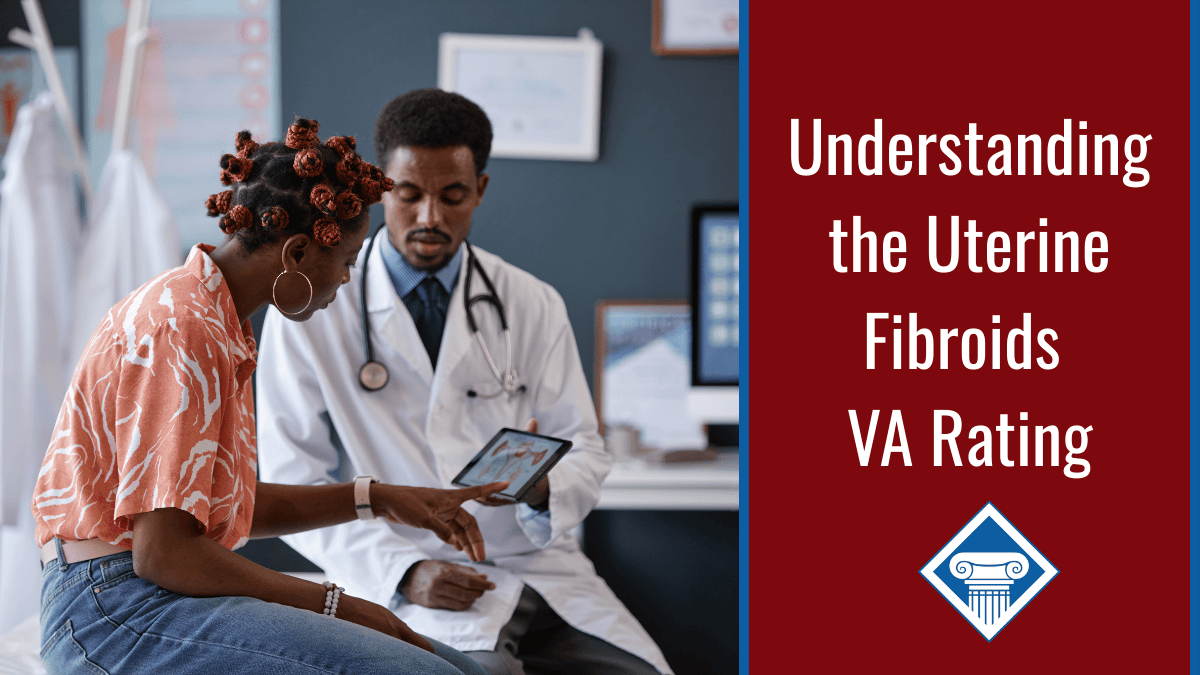
Many women have fibroids and never know it. They may not cause symptoms and are sometimes found by chance during a pelvic exam or an ultrasound. When symptoms occur, they depend on where the fibroids are located, their size, and how many there are.
Common symptoms include heavy or painful periods, periods that last longer than usual, pelvic pressure or pain, and frequent trips to the bathroom if a fibroid presses on the bladder. Some people also experience constipation or lower back pain.
Uterine fibroids and veterans
Uterine fibroids are extremely common. Research shows that about 70% of white women and 80% of Black women will develop them at some point in their lives. Uterine fibroids also tend to appear earlier and cause more severe symptoms in Black women, who make up a significant share of the women receiving VA health care.
Research has also found that exposure to environmental contaminants, including those sometimes encountered during military service, may raise the risk of developing fibroids.

Uterine fibroids VA rating
The VA rates uterine fibroids using diagnostic code 7613 for disease, injury, or adhesions of the uterus under the General Rating Formula for Disease, Injury, or Adhesions of Female Reproductive Organs. Potential ratings are 30%, 10%, and 0%, and are determined by how well the fibroids respond to treatment, if treatment is needed at all.
If the fibroids result in surgery to remove the uterus, also known as a hysterectomy, veterans will receive a temporary rating of 100% for the first three months after surgery, and 30% after that.
Uterine fibroids and related conditions
For many veterans, uterine fibroids can lead to other health problems. Below are some common conditions related to uterine fibroids.
Uterine fibroids and infertility
Depending on their size and where they grow in the uterus, fibroids may interfere with fertility. In some cases, large fibroids can block fallopian tubes or change the shape of the uterine cavity, making it more difficult to get pregnant. Fibroids have also been linked to recurrent pregnancy loss and lower live birth rates, especially when they grow into the uterine cavity.
By far the best law firm for veterans. No one would take my case and the VFW said I would never get anything from the Army. Woods & Woods said something very different and his law firm proved it. Not only did they get me full benefits, but they also got me 19 years of back money. If you go with a different lawyer, you’re just plain wrong and you will not get what you deserve. God bless Woods & Woods…

A.B., an Army veteran in Pennsylvania
From a Google review for Woods & Woods
Uterine fibroids and anemia
Heavy or prolonged bleeding during periods is one of the most common symptoms of uterine fibroids. Over time, this blood loss can lead to anemia. Anemia can cause fatigue, weakness, dizziness, headaches, and shortness of breath.
Uterine fibroids and hysterectomy
Uterine fibroids are one of the most common reasons women undergo a hysterectomy. When fibroids cause severe bleeding, pain, or other complications that do not respond to treatment, surgery may be recommended.
How Woods & Woods can help
The VA-accredited attorneys at Woods & Woods have helped thousands of veterans nationwide get the disability benefits they deserve. Call us today for a free case evaluation. You won’t pay us a dime unless we win your case.
Let’s appeal your VA decision today

Frequently asked questions
Yes. Uterine fibroids are a common reason women need to have hysterectomies, making the mandatory surgery and its impacts secondary conditions to the fibroids.
The VA rates uterine fibroids using diagnostic code 7613 under the General Rating Formula for Disease, Injury, or Adhesions of Female Reproductive Organs. Ratings are based on how well the fibroids respond to treatment and can be 0%, 10%, or 30%.

Neil Woods
Neil Woods is a VA disability attorney and the owner and president of Woods & Woods. He received his law degree from Western Michigan University.