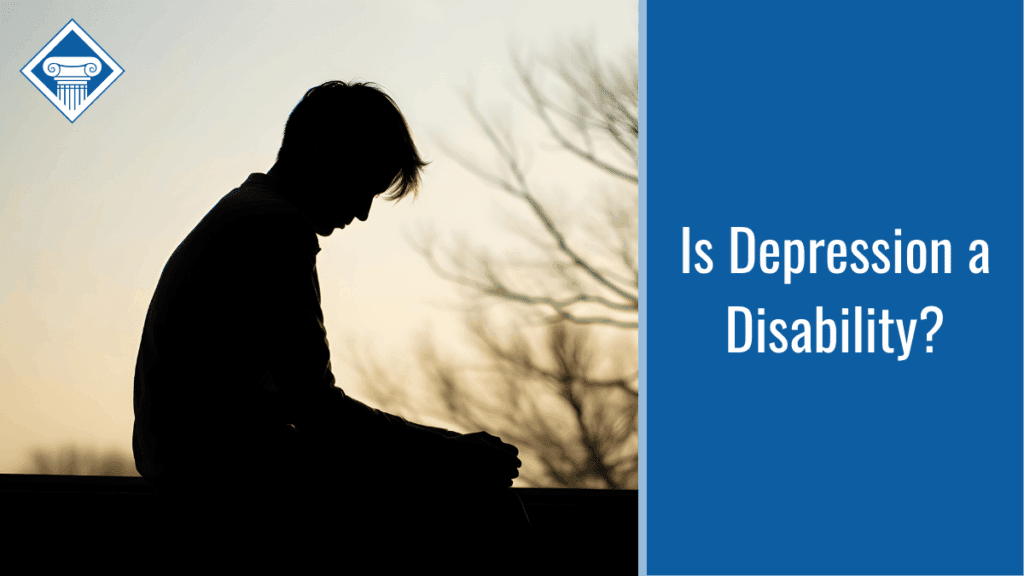
Many people living with depression find it difficult to keep a job or maintain daily routines. If this sounds familiar, you may be asking yourself, “Is depression a disability?” In some cases, it is.
Depression doesn’t look the same for everyone. For some, it causes deep emotional pain or even suicidal thoughts, while for others, it can lead to isolation, difficulty concentrating, or sleep disturbances. If these symptoms persist and severely interfere with your ability to function over time, you may qualify for Social Security Disability Insurance.
In this article, we’ll discuss how Social Security defines depression and how to qualify for disability for depression.
Get the benefits you earned.

Table of contents
Key Takeaways
- Is depression disability? Yes, depression can qualify as a disability if it is severe, long-lasting, and prevents you from working or managing daily activities.
- To determine if depression is a disability under SSA rules, you must meet the medical criteria in the Blue Book and show marked or extreme functional limitations.
- Even if you don’t meet one set of criteria, depression may still be a disability if it is serious, persistent, and requires ongoing treatment over time.
If you’re thinking about hurting yourself or considering suicide, call 911 or your local emergency services immediately.
You’re not alone — help is available. Please consider these resources:
Call
Text
What is depression?
Depression is a common but serious mental health disorder that affects how a person feels, thinks, acts, and views the world. It causes persistent sadness and can interfere with daily life in many ways.
Depression can affect anyone, at any age, and at any time. According to a 2023 national survey, nearly 30% of U.S. adults have been diagnosed with depression at some point in their lives, and about 18% are currently experiencing it.
Symptoms can vary from mild to severe and can appear differently in each person affected, including:
- Feelings of sadness or hopelessness
- Outbursts, irritability, or frustration
- Loss of interest in most or all activities
- Sleep disturbances
- Lack of energy
- Slowed thinking, speaking, or movements
- Feelings of worthlessness or guilt
- Frequent or recurrent thoughts of death or suicide
Is depression a disability?
The Social Security Administration (SSA) recognizes depression as a serious medical condition that can qualify you for Social Security Disability Insurance (SSDI) benefits. Additionally, depression can be covered under the Americans with Disabilities Act (ADA). However, neither of these facts guarantees you will receive disability benefits for the condition.
Therefore, if you’ve been diagnosed with depression, you may qualify for disability benefits. However, the SSA considers specific criteria when evaluating depression SSDI claims, which can make approval challenging for many applicants.
To be eligible for SSDI for depression, your symptoms must make it impossible to continue working gainfully and interfere with your ability to support yourself.
Your condition must also meet other requirements listed in the SSA’s Blue Book. We explain these requirements in more detail below.
How to qualify for SSDI with depression
Depression is classified as a mental disorder in the SSA’s list of qualifying impairments, also called the Blue Book, and is listed under Section 12.04.
The SSA applies strict standards to all mental health conditions, including depression.
To qualify for disability benefits, you must show your depression is severe, long-lasting, and prevents you from doing any substantially gainful work. Additionally, you must satisfy the criteria in Section 12.04A, plus the requirements in Section 12.04B or Section 12.04A, as well as the requirements in Section 12.04C.
Section 12.04A
To qualify under Section 12.04A, you must have medical documentation showing at least five of the following symptoms:
- Depressed mood
- Diminished interest or pleasure in most activities
- Sleep disturbance
- Appetite or weight changes
- Restlessness and anxiety that result in repetitive and unintentional movements
- Low energy or fatigue
- Feelings of worthlessness or excessive guilt
- Difficulty thinking, concentrating, or making decisions
- Thoughts of death or suicide
Section 12.04B
To meet the criteria in Section 12.04B, you must have either an extreme limitation in one of the following areas of mental functioning or a marked limitation in two of these areas listed below:
- Understanding, remembering, or applying information
- Interacting with others
- Concentrating, persisting, or maintaining pace
- Adapting or managing yourself
The SSA defines an extreme limitation as the inability to function independently, effectively, and consistently. A marked limitation means you can function, but your ability is significantly limited or inconsistent.
If you do not meet the above criteria outlined in A and B, that does not mean you are ineligible for disability for depression. Instead, you must meet the requirements laid out in Section 12.04A and Section 12.04C.
Section 12.04C
Under the criteria for Section 12.04C, you may qualify if your depression is considered serious and persistent, meaning that you have a medically documented history of depression for at least two years, and you receive ongoing treatment, such as:
- Mental health therapy
- Psychosocial support
- Care in a highly structured setting
- You have minimal capacity to adapt to changes or demands outside your current routine
Your chances of approval may improve if you have additional qualifying conditions related to depression, like anxiety or PTSD, or if your depression stems from an event that also caused long-term injuries that limit your ability to work.
Submitting a complete and detailed application with all the necessary records can help prevent delays, as the approval process can take several months or longer.
What evidence can help your claim?
To build a strong case to support your depression disability application, you can start by reviewing the SSA’s specific criteria and directly linking your symptoms to the requirements listed in the Blue Book. Then you’ll want to gather extensive evidence showing your symptoms meet the SSA’s criteria.
Medical evidence can include:
- Medical history reports
- Clinical findings (such as the results of physical or mental status exams)
- Lab results or test results
- Imaging (such as CT scans, x-rays, and MRIs)
- Emergency room visit summaries
- Diagnosis
- Treatment prescribed with response and prognosis
- A statement from a medical professional on what work activities they believe you are capable of doing despite your condition
- Any treatment information
- Info about your daily activities and capabilities
Submitting thorough medical evidence to support your diagnosis and keeping a personal log detailing how your symptoms impact your daily life and ability to work can also help support your claim. These details add valuable context and make your claim more compelling.
How long does it take to get a disability decision?
When considering how long a disability claim can take, it’s important to keep in mind that there is no one-size-fits-all answer.
The time it takes to get a disability decision depends on several factors, like whether the SSA needs more information to process your claim. On average, the wait for an initial SSDI decision is about 6.3 months, or roughly 193 days.
According to the SSA’s 2023 Annual Report, about 20% of applications were approved at this stage, meaning nearly three out of four claims were denied.
Don’t get discouraged if you’re denied. You can appeal, but be aware that the appeals process can add another six months or more to your wait.
How do I appeal a decision if I was denied?
If your SSDI application is denied, you have the right to appeal the decision. According to the SSA, approximately 80% of SSDI claims are rejected at the initial level, often due to insufficient medical evidence, limited work history, or other technical issues. Because the appeals process can take time, it’s important to act quickly – you only have 60 days to file your appeal.
While appealing a denial is always worthwhile, it doesn’t guarantee approval, as many applicants are denied even after multiple appeals. However, working with an experienced disability lawyer can help strengthen your case and improve your chances of success.
How Woods & Woods can help
Having a disability shouldn’t mean losing your peace of mind. At Woods & Woods, we help individuals with disabilities connect with legal help. If you’re seeking SSDI benefits, call us today for a free case evaluation.

Don’t face Social Security alone.
Frequently asked questions
Yes, depression can be considered a disability if it’s severe enough to prevent you from working. To qualify, you must meet the SSA’s medical criteria and other SSDI eligibility requirements.
You can receive benefits as long as your depression keeps you from working and you continue to meet eligibility requirements. The SSA may review your case to see if your condition has improved.

Lori Underwood
Lori Underwood received her law degree from Northern Kentucky University. She previously practiced Social Security disability and personal injury law and was a juvenile court attorney.
She has been an attorney at
Woods & Woods since 2014.