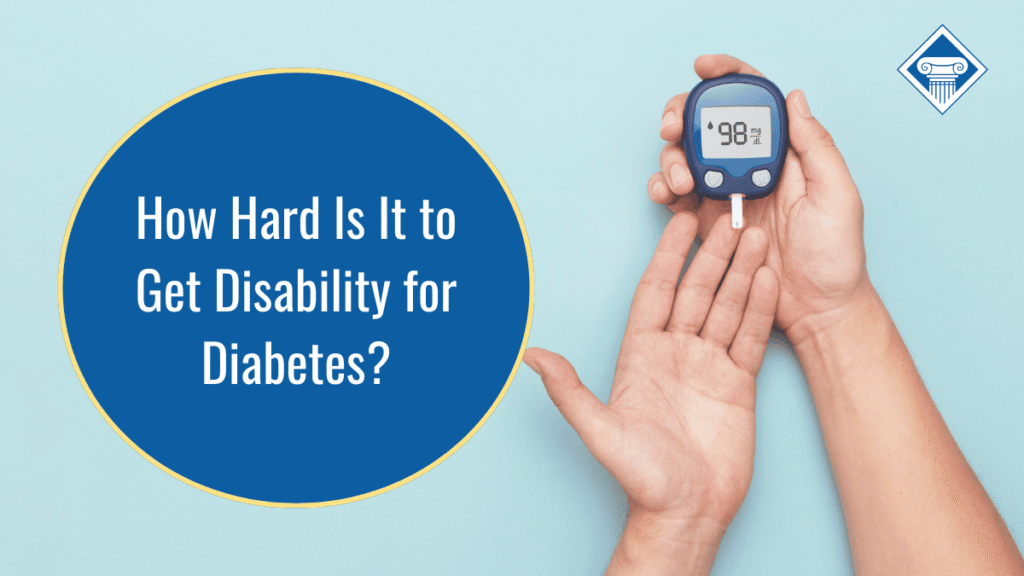
Diabetes is a serious condition that affects millions of people. While many can manage it with medication, diet, and lifestyle changes, others develop complications that interfere with their ability to work and handle everyday tasks. So, naturally, many will ask: “Is diabetes a disability, and how hard is it to get disability for diabetes?”
Get the benefits you earned.

If diabetes or related conditions are making it hard for you to keep a job, you may be wondering whether you qualify for disability benefits. In some cases, you may be eligible for Social Security Disability Insurance through the Social Security Administration.
In this article, we’ll explain when diabetes is considered a disability, how Social Security evaluates claims, and what you can do to strengthen your case for the benefits you’ve earned.
Key Takeaways
- Diabetes can qualify for SSDI, but a diagnosis alone isn’t enough. The Social Security Administration recognizes diabetes as a serious condition, but you must prove your symptoms prevent you from working to qualify for SSDI.
- Complications often determine eligibility. Diabetes claims are usually approved based on related complications, such as neuropathy, vision loss, kidney disease, or heart problems, that meet specific Blue Book criteria.
- Medical evidence makes or breaks your claim. Having detailed medical records, test results, and doctor statements linking your symptoms to work limitations is essential for a strong application and increases your likelihood of approval.
In this article about how hard it is to get disability for diabetes:
What is diabetes?
Diabetes is a chronic disease that affects the pancreas, preventing it from producing enough insulin or preventing the body from effectively using the insulin it produces.
There are two main types of diabetes: type 1 and type 2. Both are long-term, chronic conditions that can lead to serious health problems. Type 1 diabetes occurs when the body stops producing insulin, typically starting in childhood and lasting into adulthood. Type 2 diabetes happens when the body’s cells stop using insulin properly, which can lead to high blood sugar levels if not treated. Other less common types of diabetes include gestational and monogenic diabetes.
Reducing your risk of type 2 diabetes may be possible by making healthy lifestyle changes. Modifiable risk factors for diabetes include smoking, weight, and physical activity. However, there are some risk factors that can’t be changed. These non-modifiable risk factors include family history, race or ethnic background, and age.
Symptoms of type 1 and type 2 diabetes can include:
- Feeling very thirsty
- Feeling very hungry, even after eating
- Frequent urination
- Losing weight without trying
- Tingling, pain, or numbness in the hands and feet
- Ketones in the urine
- Extreme fatigue
- Blurry vision
- Slow healing of injuries
- Frequent yeast infections
Is diabetes a disability?
The Social Security Administration (SSA) recognizes both type 1 and type 2 diabetes as serious medical conditions that can qualify you for Social Security Disability Insurance (SSDI) benefits. Additionally, diabetes is typically covered under the Americans with Disabilities Act (ADA). However, neither of these facts guarantees you will receive disability benefits for the condition.
To be eligible for SSDI with diabetes, your symptoms must make it impossible to continue working gainfully and interfere with your ability to support yourself.
Your condition must also meet other medical requirements listed in the SSA’s Blue Book. We explain these requirements in more detail below.
How to qualify for SSDI with diabetes
Diabetes is classified as an endocrine disorder in the SSA’s list of qualifying impairments, also called the Blue Book, and is listed under Section 9.00.
To qualify for disability benefits, you must show your condition is severe, long-lasting, and prevents you from doing any substantially gainful work. Additionally, the SSA evaluates endocrine disorders under the listings for other body systems. This is because endocrine disorders can cause a wide variety of complications throughout the entire body, not just in one localized area.
Demonstrating how your condition affects your ability to work can increase your chances of qualifying for disability benefits. This could include showing you can’t work because of a combination of symptoms from diabetes and related conditions. It may also be helpful to work closely with a doctor so your condition can be properly documented.
The SSA looks for detailed medical records when they evaluate your application. Submitting a complete and detailed application with all the necessary records can help prevent delays, as the approval process can take several months or longer.
What evidence can help your claim?
To build a strong case to support your disability application for diabetes, you can start by reviewing the SSA’s specific criteria and directly linking your symptoms to the requirements listed in the Blue Book. Then you’ll want to gather extensive evidence showing your symptoms meet the SSA’s criteria.
Medical evidence can include:
- Medical history reports
- Clinical findings (such as the results of physical or mental status exams)
- Lab results or test results
- Imaging (such as CT scans, x-rays, and MRIs)
- Emergency room visit summaries
- Diagnosis
- Treatment prescribed based on response and prognosis
- A statement from a medical professional on what work activities they believe you are capable of doing despite your condition
- Any treatment information
- Info about your daily activities and capabilities
Submitting thorough medical evidence to support your diagnosis and keeping a personal log detailing how your symptoms impact your daily life and ability to work can also help support your claim. These details add valuable context and make your claim more compelling.
How long does it take to get a disability decision?
When considering how long a disability claim can take, it’s important to keep in mind that there is no one-size-fits-all answer.
The time it takes to get a disability decision depends on several factors, like whether the SSA needs more information to process your claim. On average, the wait for an initial SSDI decision is about 6.1 months, or roughly 188 days.
According to the SSA’s 2024 Annual Report, about 18% of applications were approved at this stage, meaning nearly four out of five claims were denied.
Don’t get discouraged if you’re denied. You can appeal, but be aware that the appeals process can add another six months or more to your wait.
How do I appeal a decision if I was denied?
If your SSDI application is denied, you have the right to appeal the decision. According to the SSA, approximately 80% of SSDI claims are rejected at the initial level, often due to insufficient medical evidence, limited work history, or other technical issues. Because the appeals process can take time, it’s important to act quickly – you only have 60 days to file your appeal.
While appealing a denial is always worthwhile, it doesn’t guarantee approval, as many applicants are denied even after multiple appeals. However, working with an experienced disability lawyer can help strengthen your case and improve your chances of success.
How Woods & Woods can help
Having a disability shouldn’t mean losing your peace of mind. At Woods & Woods, we help individuals with disabilities connect with legal help. If you’re seeking SSDI benefits, call us today for a free case evaluation.
Claim what you worked for.

Frequently asked questions
Yes, the SSA considers diabetes a disability as long as your condition prevents you from working. However, if you can manage your diabetes symptoms and continue working, the SSA will not approve your disability claim.
It can be difficult to be approved for disability for only diabetes. Demonstrating how the condition affects your ability to work can increase your chances of receiving SSDI benefits. This could include showing you can’t work because of a related condition associated with your diabetes.

Lori Underwood
Lori Underwood received her law degree from Northern Kentucky University. She previously practiced Social Security disability and personal injury law and was a juvenile court attorney.
She has been an attorney at
Woods & Woods since 2014.