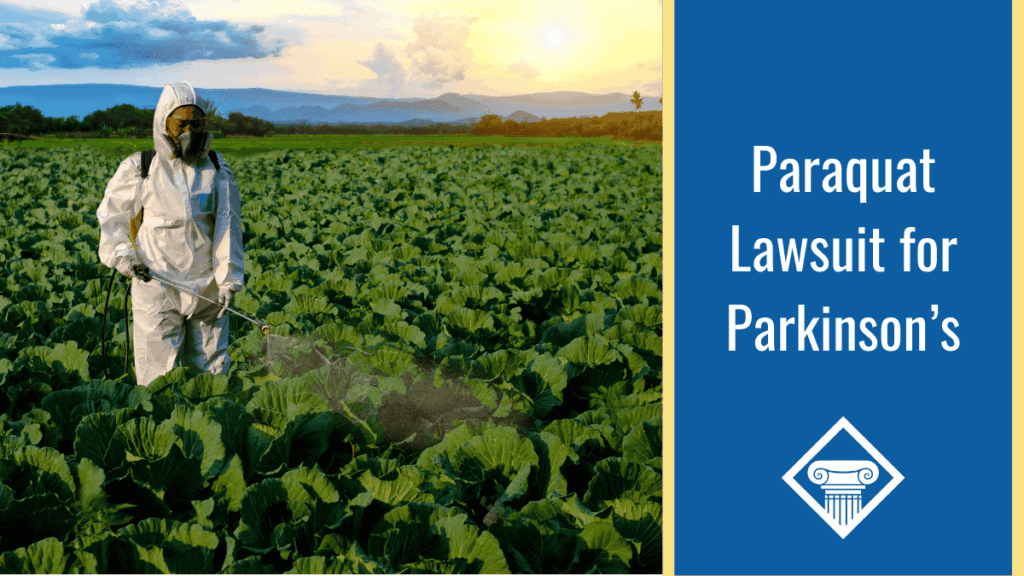
Paraquat is one of the most widely used herbicides in the United States, and also one of the most toxic.
Farmers and agricultural workers apply millions of pounds of it each year to control weeds and grass on a variety of crops. But growing research shows a troubling link: exposure to paraquat may significantly increase the risk of developing Parkinson’s disease.
In this article, we’ll explain what paraquat is, how exposure may cause harmful symptoms, and who may be eligible to join the ongoing paraquat lawsuit.
What is Paraquat?
Paraquat is a toxic, non-selective herbicide. It’s able to kill many weeds and grasses quickly, but is also toxic to humans and animals. More than 70 countries have banned or phased out paraquat due to its dangerous side effects.
Studies done by the National Institute of Health’s Environmental Health Sciences and the Parkinson’s Institute and Clinical Center found that people exposed to paraquat developed Parkinson’s disease up to 2.5 times more often than people who were not.
Companies like Syngenta, Growmark, and Chevron continue to manufacture paraquat despite the known link to Parkinson’s disease, causing critics to accuse these companies of failing to warn consumers about the exposure effects.
What is Parkinson’s disease?
Parkinson’s disease is a progressive neurological movement disorder that develops when part of the brain called the basal ganglia begins to deteriorate. As nerve cells weaken, become damaged, and eventually die, symptoms gradually appear, including tremors, stiffness, slowed movement, and difficulty with balance.
The condition also causes a major shift in brain chemistry. Research shows that most people with Parkinson’s have already lost 60 to 80% of their dopamine-producing brain cells by the time symptoms become noticeable. Dopamine is a vital neurotransmitter that helps brain cells communicate and controls smooth, coordinated movement. When dopamine levels drop too low, the body struggles to carry out normal motor functions.
Symptoms connected with Paraquat and Parkinson’s disease
Only licensed applicators can use the highly restricted herbicide paraquat, putting farmers and agricultural workers at the highest risk of exposure. Research has linked paraquat and similar herbicides, sometimes sold under brand names such as Gramoxone, Firestorm, Cyclone, Helmquat, Parazone, and Parashot, to an increased risk of Parkinson’s disease.
Parkinson’s disease affects everyone differently, but its four primary symptoms often include:
- Tremors – usually beginning in one hand, but sometimes starting in the foot or jaw
- Rigidity – muscle stiffness or resistance to movement
- Bradykinesia – slowed or reduced movements
- Postural instability – problems with balance, posture, or walking gait
Paraquat poisoning and exposure symptoms
Seek medical attention or contact your local poison control center if you experience any of these symptoms after exposure to paraquat:
- Pain
- Swelling
- Immediate damage to the throat, mouth, and intestines
- Abdominal pain
- Vomiting
- Trouble breathing
What are the Paraquat lawsuit settlement amounts?
Settlement amounts can vary significantly, often ranging from $10,000 to $200,000. The exact amount depends on how severely paraquat exposure has affected your life and how strong the evidence is linking your condition to the chemical.
Generally, the greater the impact and the more proof you can provide, the higher the potential compensation. This is why it’s important to speak with a lawyer who can review your medical history and help build your case.
What is the Paraquat lawsuit?
Paraquat has been widely used across the United States by farmers and agricultural workers since it was first registered in 1964. Because of its highly toxic nature, the U.S. Environmental Protection Agency (EPA) classified all paraquat products as “restricted-use” in 1978, meaning only licensed applicators can handle it.
If you were exposed to paraquat sometime since 1961 while working in agriculture or farming and developed Parkinson’s disease, you may be eligible for compensation.
Fill out the form below or call today to contact the team at Woods & Woods for a free and confidential case evaluation.
"*" indicates required fields
Woods & Woods, LLC is not affiliated with, sponsored by, or associated with the National Institute of Health Environmental Sciences, the Parkinson’s Institute and Clinical Center, Syngenta, Growmark, or Chevron Corporation.