If you’ve been diagnosed with sleep apnea, your doctor may have recommended you start using a CPAP machine. These machines are highly effective in treating sleep apnea and can help you feel more awake and alert during the day. However, many veterans may not use them regularly because they can be uncomfortable. Although CPAP machines may not be the most fun to use, they’re the best way to treat sleep apnea.
Talk to Us About Your Claim:
(812) 426-7200
In this article about CPAP machines for veterans:
What is sleep apnea?
Sleep apnea is a condition that impacts your ability to get into the deeper, more restful stages of sleep. It can leave you tired throughout the day as well as posing many other health risks.
When a person with sleep apnea begins falling asleep, the muscles in the back of their throat relax, causing the soft palate to drop down. This blocks off airways and prevents the individual from getting the oxygen they need. As carbon dioxide builds up in their system and their heart rate drops, their brain wakes them up so they can breathe.
In addition to leaving a person exhausted throughout the day, sleep apnea puts the heart under more stress, and leaves the individual at higher risk for high blood pressure and other heart problems such as heart attack or stroke. It also increases the risk of developing type 2 diabetes as well as metabolic syndrome.
What is a CPAP?
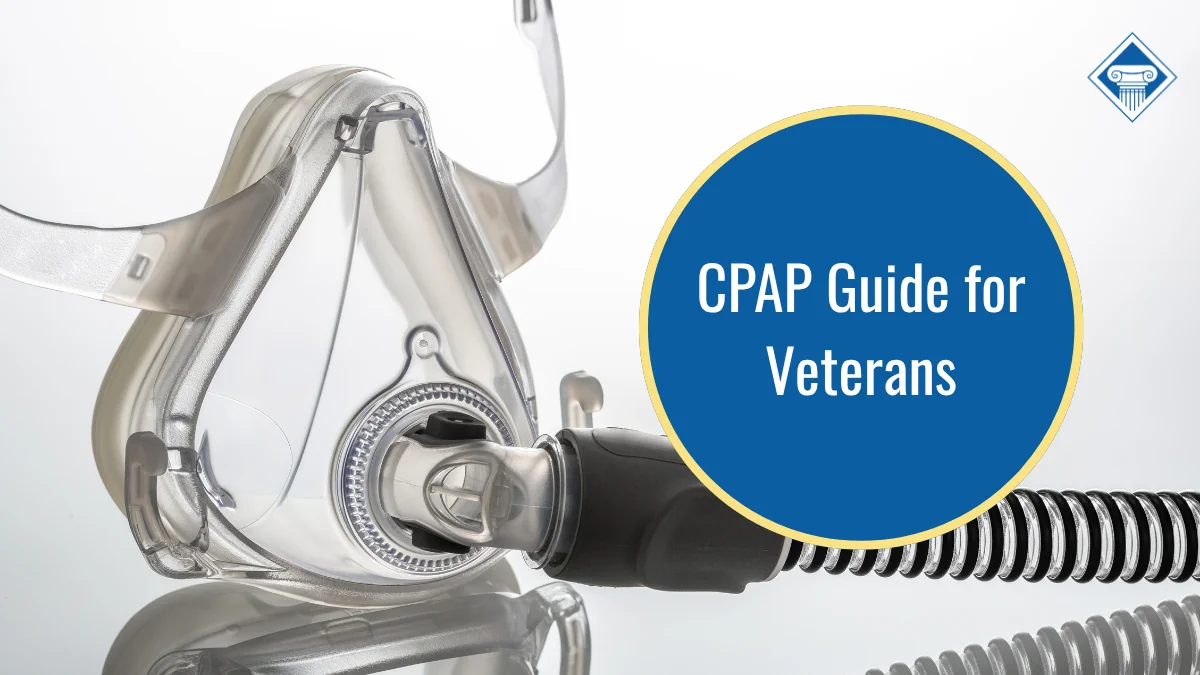
A continuous positive air pressure (CPAP) machine is one of the most effective treatments for obstructive sleep apnea (OSA), as well as a variety of other conditions. It uses pressure to keep airways open and ensures the user gets enough oxygen and rest.
People with sleep apnea who use a CPAP machine report a reduction in daytime sleepiness. Patients who use a CPAP machine for seven hours a night or more have fewer symptoms of depression and fewer heart problems than patients who use it for five hours or less. People with sleep apnea and coronary artery disease who use a CPAP machine are less likely to experience heart failure.
Using a CPAP machine can reduce the risk of stroke, in part because of the strong connection between stroke and sleep apnea. The device can also treat upper airway resistance syndrome, a less serious form of sleep-disordered breathing.
How to qualify for VA disability for sleep apnea
If you are applying for VA disability compensation for sleep apnea, you must have a medical diagnosis of sleep apnea and medical evidence of either:
- a direct service connection (the condition was caused or aggravated by a specific incident or set of conditions during military service) OR
- a secondary service connection (the condition was caused by an existing service-connected condition)
For instance, post-traumatic stress disorder (PTSD) may lead to sleep apnea. In this case, PTSD could be a direct service connection and sleep apnea could be connected on a secondary basis.
Sleep apnea VA ratings
The VA ratings for sleep apnea range from 0% to 100%.
Is your CPAP machine tracking you?
A CPAP machine, which monitors how many hours you sleep and the number of sleep disruptions, is capable of sending data to doctors and insurance companies. Although the machines can transmit compliance data, a VA rating of 50% for sleep apnea is based on the need for a CPAP machine and not on compliance.
It is important to use a CPAP machine as prescribed for the best results possible. However, wearing a CPAP mask is difficult for some people. In a study published in 2010, veterans with PTSD were less likely to use a prescribed CPAP than veterans without PTSD. The reasons non-compliant veterans gave for not using the machines included increased nightmares, mask discomfort, claustrophobia, and air hunger.
How often does the VA replace CPAPs?
When you get a CPAP machine, you’ll need to maintain it to keep it working as it should. You’ll need to replace the filters in your CPAP machine every two to three months. You should replace the entire mask twice a year to keep it fitting properly on your face.
If you have VA disability benefits, the VA should help you replace the parts of your CPAP machine as needed. They may also allow you to bring in your CPAP machine for inspection and maintenance once a year. If it’s determined you need a new CPAP machine, they may replace it for you; visit your local VA office for more information.
Common CPAP complaints
While a CPAP machine can help you take your life back from sleep apnea, it isn’t always the most fun to use. Many CPAP users find that the mask is hard to sleep in, or they may feel self-conscious about sleeping with it on. The tubing that connects your mask to the machine may also be restrictive if you move around in your sleep.
Many people also find that they wake up with a dry nose and a sore throat after a whole night of using their CPAP machine. You may develop a runny nose, congestion, and sneezing, or your eyes and the skin on your face may become irritated. Some people even experience abdominal bloating after using it.
There are some things you can do at home to make your CPAP machine more comfortable to use. If you find your nose is runny or stuffed up, your doctor may be able to prescribe you a decongestant or a nasal spray to relieve your symptoms. Your doctor may also be able to help you adjust your mask to make it work better for you.
If your mouth and nose are dry, you can use a saline spray just before bed to reduce water loss. You can also set up a humidifier in your room to raise the overall moisture level when you sleep. You should also give things some time – you’ll likely become accustomed to your CPAP machine the more you use it.

How Woods & Woods can help
Woods & Woods has represented thousands of veterans in VA disability appeals cases. Call for a free consultation. If we take your case, you won’t pay unless we win.
Talk to Us About Your Claim:
(812) 426-7200
Frequently asked questions
Indirectly. We help thousands of veterans get VA disability and if you haven’t already had a diagnosis of sleep apnea, you will need to get that diagnosis from a doctor. This is part of the VA disability application process and we will walk you through it when you give us a call at (812) 426-7200.
CPAP machines are capable of sending data to doctors and insurance companies. Although the machines can transmit compliance data, a VA rating of 50% for sleep apnea is based on the need for a CPAP machine and not on compliance.

Neil Woods
Neil Woods is a VA disability attorney and the owner and president of Woods & Woods. He received his law degree from Western Michigan University.